Bernie Kalisky, the man, the myth, the legend, went home to heaven on Dec. 28, 2025. We celebrated my dad’s life in the way he wanted – mass and a party. There were friends, family, food, desserts, wine, and a few “Polish 13’s” (his version of a 7 and 7). I still imagine him waiting for me to visit with candy or cookies in my bag. I always had something.
During my Dad’s funeral mass, Fr. Sahd said, “Bernie’s life has changed, but it didn’t end.” I find comfort in thinking of my dad looking down from heaven, smiling. According to my Aunts, my dad got the express lane because “The gates to heaven are open at Christmas.”
Personally, I don’t think he needed the express lane – heaven was waiting for him. He earned it! I had the joy of growing up with a dad that “everybody loved.” Each of us has memories of Mr. Kalisky, Bernie, Uncle Bernie, Dad, Pap-Pap, and, as his caregivers called him, Bern. He was everyone’s biggest fan – he cheered on his own children, nieces, nephews, and later his grandchildren, grandnieces, and nephews in every sport, musical, play, or concert.
When he died on my mom’s birthday, she said, “He gave me the greatest present – a great life with him for 66 years.” My mom was absolutely right. Love stories like theirs don’t happen anymore. My mom was 20 when they were married, with written permission from her parents. Together, they raised three children and have eight grandchildren and three great-grandchildren. That’s a legacy.
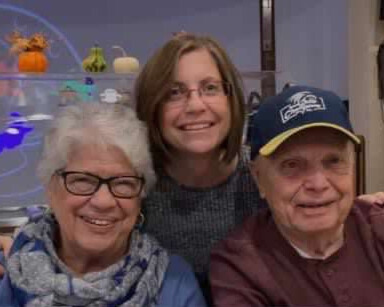
My mom has joked with us, saying, “He died on my birthday to make sure I don’t forget him.” I don’t see it that way. I think he died on her birthday to be with her – and to make sure that she never feels alone. In doing so, we all have that day to pause and think about each other.
I was the baby in the Kalisky family. Was I spoiled? Absolutely! In a way, we all were. My dad drove the entire East Coast to pick me up whenever a friend invited me to stay over or go on vacation. He never said, “No.” He even picked me up from Girl Scout Camp. In fact, I am pretty certain he planned for that late-night phone call. I cried, and he was there as soon as he could get to me. Sometimes it was the next day, and sometimes it was in 20 minutes. He never said much, except once.
On the PA turnpike, we stopped at a rest stop on our way to the University of Pittsburgh for my Freshman year in the School of Engineering. He sat across the table from me. As we ate our Burger King lunch, he stopped and looked at me. Without batting an eye, he said, “I sent the check. You are staying for at least the semester. I will not come to get you and take you home.”
He was a man of his word. I called home crying – that I had made a mistake – it didn’t faze him. He did not come to pick me up.
I stayed. I graduated. In those 4.5 years, he moved me a few times, and once, he moved my roommates who were gone for the summer. He parked in the truck parking at every rest stop, and he took down at least 3 street signs from Pittsburgh. He supported me unconditionally – even when I knew I failed my Calculus V class. Although the answers I put on my scan sheet resulted in a cool design, I knew it would not save my grade, he was optimistic that “maybe” I would pass. When my grades finally arrived (yes – in the mail), my dad had me paged at work and said, “Yep, you failed. It says F.”
His attitude helped keep me motivated to try again, and in the end, my dad finally had an Engineer in the Family – me. I was his last shot, and he supported me in a very difficult curriculum, one that was 70% guys and 30% girls. At the time, I never thought about the gender disparity. I had good grades, took the same placement tests, and earned my spot. I was raised to believe that we all put our pants on one leg at a time – be grateful for the wins and learn from the losses.
It’s ironic that I now speak out about the gender disparity in Parkinson’s representation. I support organizations that continue to improve treatment plans for women facing a traditionally male disease. I have even been published and been a guest on The Parkinson’s Life Podcast.
Women are not little men. Yet, most treatment plans, including medications, are the same. As the demographic continues to change and the female PD community grows, women’s needs are being brought to the table. My dad would tell me to get a seat.
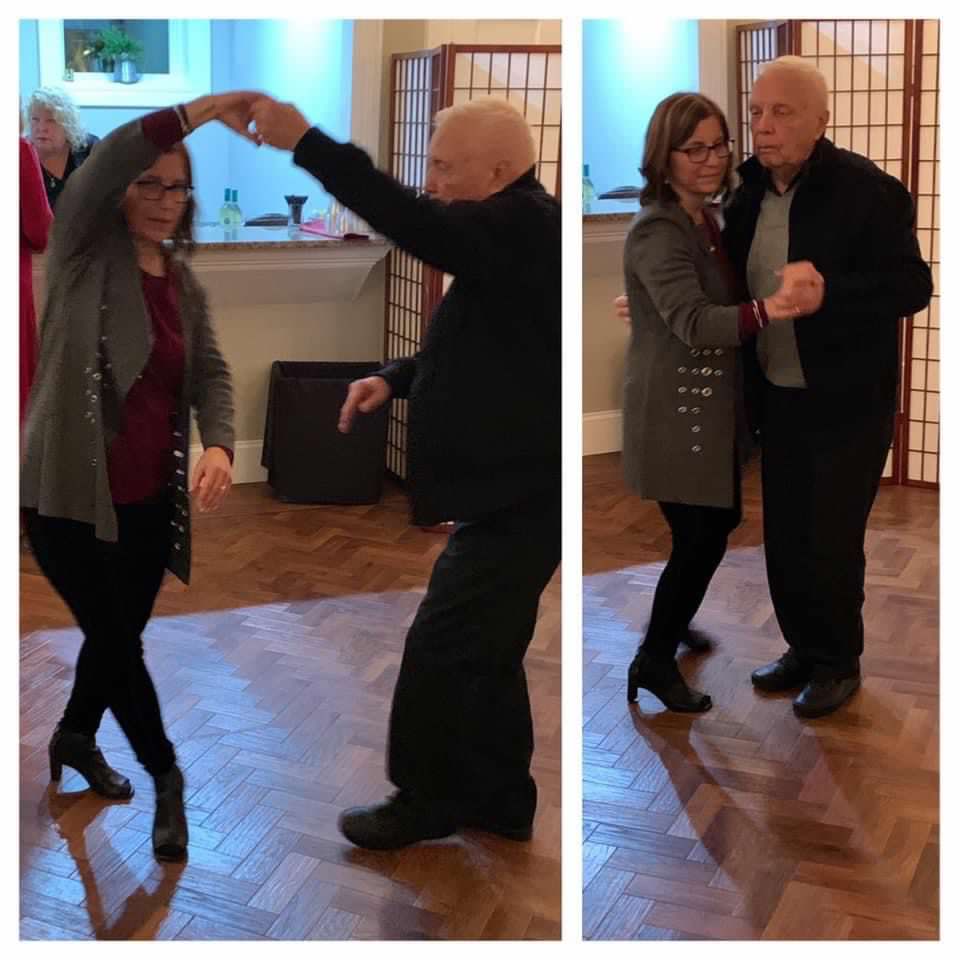
Over the last few years, my dad and I were “brain buddies” and we called ourselves the duo of Batman and Robin. We fought together as he faced Alzheimer’s, and I fought Young-Onset PD. We boxed, we danced, and we drummed. We spent time together and created memories that will last a lifetime. In addition to Robin the sidekick, I was the “Dad Whisperer.” He listened to me. He trusted me.
There were times when my mom was unsure, and I said things like, “I know he would not want this because I can tell you that I would not want this.” While it was hard for me to say because the scenario of “this could be me someday” was scary, it reassured my mom that I knew what he wanted.
Looking back, while we were trying to keep my dad at home, many people asked me, “How do you do it?”
At the time, the answer was simple, “I don’t know, I just do it – he is my dad.”
He was a constant in my life, and it was my turn to be one in his. I was his advocate, and he knew it. He trusted me. I became his voice. But there were still times when it got overwhelming – times when I felt that I may be looking at a version of my future self or that my current challenges would render me helpless—and I hid from all of it. Over his last few weeks, his caregiver made videos of him talking to us. Some of his last words were, “Take care of your mom because your dad won’t be here.” My dad died on Dec 28th. He was at peace and went on his terms. He knew we would be okay. We told him that he had done everything right and that we would take care of Mom.
I am a seasoned movement disorders veteran and advocate. I must trust my family and my community to advocate for me as I have for them. And like my dad, I can sit at a local bar and drink a beer with anyone who wants to listen and turn around the next day, and introduce a guest speaker at a formal event.
I am playing Parkinson’s pinball. I am part of the YOPD community, yet these young warriors can run circles around me. However, I’m still on the varsity team. I can still run, and I’m still in the game – as long as the game’s over by 8PM.
I will leave you with one final lesson from my dad…When I told my dad I had Parkinson’s, he looked at me and said, “So, you’ll shake a little, we’ll still love you.” And he did. That may sound simple, but the answer doesn’t always have to be complicated. Love yourself and those around you for who they are now – in this very moment.